








Published by AITechStart.com
🤖 Disclaimer: Some parts of this article may have been generated with the help of AI technology. All content has been reviewed for accuracy and relevance.
Introduction: The Warehouse Is Changing Fast
The warehouse has long been the backbone of modern commerce. From e-commerce fulfilment centers to cold storage facilities, these spaces move millions of products every single day. But a quiet revolution is underway — one that could reshape everything we know about logistics, labor, and supply chains.
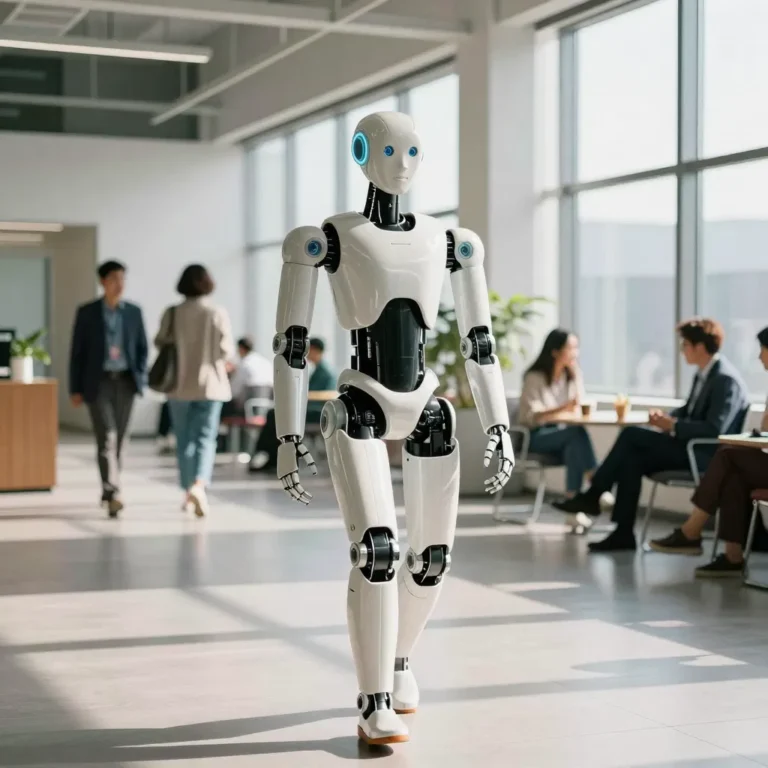
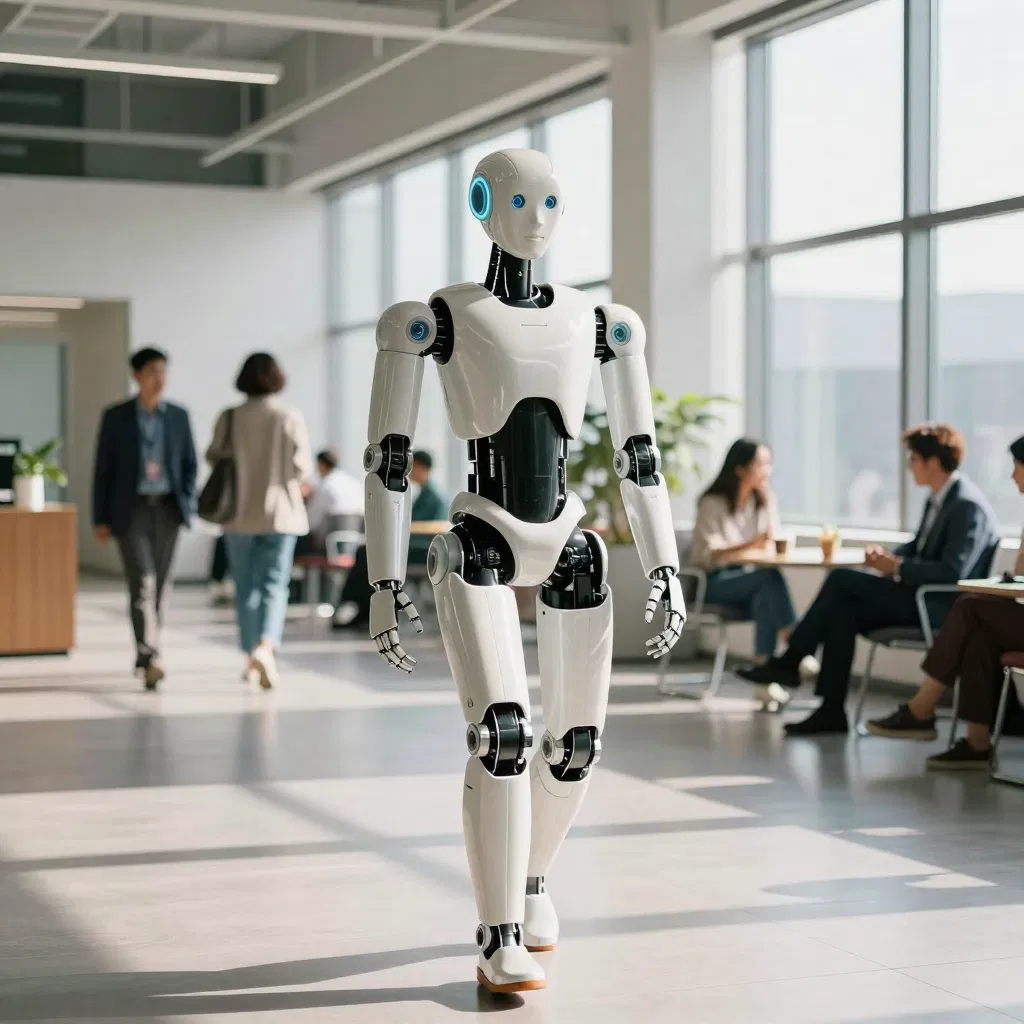
Humanoid robots powered by artificial intelligence are no longer science fiction. They are rolling (and walking) into warehouses across the globe. Companies like Tesla, Boston Dynamics, Agility Robotics, and Figure AI are racing to deploy bipedal machines that can lift, sort, navigate, and collaborate alongside human workers.
But the big question remains: Are we ready for AI in the warehouse?
Let’s explore the technology, the opportunities, and the challenges behind this emerging trend.
What Exactly Are Humanoid Warehouse Robots?
Humanoid robots are machines designed with a human-like body structure — two legs, two arms, a torso, and sometimes a head. When integrated with advanced AI systems, they gain the ability to:
- 🧠 Understand and interpret their surroundings
- 🦾 Manipulate objects of varying shapes and sizes
- 🗺️ Navigate complex, dynamic warehouse floors
- 🤝 Collaborate safely with human co-workers
- 📦 Learn new tasks over time through machine learning
Unlike traditional warehouse automation — such as conveyor belts, robotic arms, and AGVs (Automated Guided Vehicles) — humanoid robots offer flexibility and adaptability. They don’t require the entire warehouse layout to be redesigned. They can walk through aisles, climb steps, open doors, and use the same tools humans use.
Why Warehouses Are Turning to Humanoid Robots
📈 1. Labor Shortages Are Reaching Critical Levels
Warehouse and logistics operations are facing a well-documented labor crisis. High turnover rates, physically demanding work environments, and competition for workers have left many facilities understaffed.
Humanoid robots offer a scalable workforce solution that doesn’t call in sick, take vacations, or burn out.
⚡ 2. Rising Demand for Speed and Accuracy
With the growth of same-day and next-day delivery expectations, warehouses must operate faster than ever. AI-powered robots can work around the clock with consistent accuracy, reducing errors in picking, packing, and sorting.
💰 3. Long-Term Cost Efficiency
While the upfront investment in humanoid robots is significant, the long-term return on investment (ROI) can be substantial. Companies save on:
- Overtime wages
- Training and onboarding costs
- Workplace injury claims
- Productivity losses due to human error
🏗️ 4. No Infrastructure Overhaul Required
One of the most compelling advantages of humanoid robots is their human-compatible design. Unlike purpose-built robotic systems, humanoids can operate in existing warehouse environments with minimal modification.
Real-World Players Leading the Charge
| Company | Robot Model | Key Capability |
|---|---|---|
| Agility Robotics | Digit | Package handling, logistics tasks |
| Figure AI | Figure 02 | General-purpose warehouse work |
| Boston Dynamics | Atlas | Heavy lifting, complex movements |
| Tesla | Optimus | Factory and warehouse automation |
| UBTECH | Walker | Inspection and material transport |
These companies are not building prototypes for the shelf. They are actively piloting robots in real warehouse environments, partnering with logistics giants and manufacturers to test performance at scale.
The Technology Behind AI-Powered Humanoid Robots
🧠 Artificial Intelligence & Machine Learning
At the core of every humanoid robot is a sophisticated AI system. These systems process data from sensors, cameras, and microphones to make real-time decisions. Over time, machine learning algorithms allow robots to improve their performance on specific tasks.
👁️ Computer Vision
Humanoid robots use advanced computer vision to identify objects, detect obstacles, read labels, and understand their spatial environment. This is critical in dynamic warehouses where layouts change frequently.
🦾 Robotics & Motion Planning
Bipedal locomotion — walking on two legs — is one of the hardest challenges in robotics. Modern humanoids use complex motion planning algorithms to maintain balance, avoid collisions, and move efficiently across uneven surfaces.
☁️ Cloud & Edge Computing
Many humanoid robots rely on cloud computing for processing large datasets and edge computing for real-time, on-device decision-making. This hybrid approach ensures both speed and intelligence.
Benefits of AI and Humanoid Robots in the Warehouse
✅ Increased Productivity — Robots can operate 24/7 without breaks ✅ Improved Safety — AI reduces the risk of accidents and injuries ✅ Better Accuracy — AI-driven picking minimizes order errors ✅ Scalability — Deploy more robots during peak seasons (like holidays) ✅ Data-Driven Insights — Robots collect valuable operational data ✅ Employee Satisfaction — Humans can shift to supervisory and creative roles
Challenges That Could Slow Adoption
⚠️ 1. High Initial Investment
The cost of acquiring, integrating, and maintaining humanoid robots remains a barrier, especially for small and mid-sized warehouses.
🔧 2. Technical Limitations
Despite rapid progress, humanoid robots still struggle with:
- Handling very small or irregularly shaped items
- Navigating cluttered or unpredictable spaces
- Performing tasks that require fine motor dexterity
👥 3. Workforce Displacement Concerns
One of the most sensitive issues is job displacement. Workers in warehouses fear being replaced entirely by robots. Organizations must approach adoption with transparency and a clear reskilling strategy.
📜 4. Regulatory and Safety Standards
There is still a lack of universally accepted safety standards for robots that share workspaces with humans. Governments and industry bodies are working to close this gap, but progress is uneven.
🔐 5. Cybersecurity Risks
As with any connected AI system, humanoid robots are vulnerable to cyber threats. A compromised robot in a warehouse could disrupt operations or compromise sensitive data.
Are We Really Ready? An Honest Assessment
The honest answer: We are closer than ever, but not fully ready.
The technology is maturing rapidly. Pilots are proving that humanoid robots can handle real warehouse tasks with impressive results. However, full-scale, mainstream adoption requires:
- 📉 Reduced hardware costs
- 📖 Standardized safety and regulatory frameworks
- 🧑🏫 Workforce reskilling programs
- 🔒 Stronger cybersecurity protocols
- 🤝 Clear policy on human-robot collaboration
The transition won’t happen overnight. Instead, we’ll likely see a phased integration — humanoids working alongside humans, handling repetitive or hazardous tasks first, before gradually taking on more complex roles.
The Future: What to Expect in the Next 5 Years
Looking ahead to 2025–2030, experts predict:
- 🚀 Humanoid robots will become a standard part of large-scale warehouse operations
- 🌐 AI models will become more versatile, enabling faster onboarding of new tasks
- 💵 Hardware costs will drop significantly due to competition and economies of scale
- 📊 Warehouse analytics will be deeply integrated with robotic fleet management
- 🧠 Foundation models for robotics (similar to GPT for language) will accelerate development
How Businesses Should Prepare
If you’re a warehouse operator or logistics leader, here’s how to position yourself for the AI-driven future:
- Audit your operations — Identify tasks most suitable for robotic automation
- Start small — Pilot a humanoid robot in a controlled area before scaling
- Invest in training — Upskill your workforce to manage and maintain robots
- Partner with innovators — Collaborate with robotics and AI startups
- Stay informed — Follow the latest developments in humanoid robotics and warehouse AI on AITechStart.com
Final Thoughts
Humanoid robots in the warehouse represent one of the most exciting — and complex — frontiers in AI and automation. The technology is no longer hypothetical. It’s here, it’s evolving, and it’s demanding our attention.
Are we ready? Not fully. But the foundation is being laid right now. Organizations that begin preparing today — through strategic investment, workforce development, and thoughtful planning — will be the ones leading the warehouses of tomorrow.
The future of warehousing isn’t just automated. It’s intelligent, adaptive, and human-inspired. 🚀
Related Reading:
- AI in Supply Chain Management: The Complete Guide
- Top 10 Robotics Trends Shaping 2025
- How Generative AI Is Transforming Logistics
🤖 Disclaimer: Some parts of this article and any associated images may have been generated with the help of AI technology. Content has been reviewed for accuracy and intended for informational purposes only.
Tags/SEO Keywords: humanoid robots, AI in warehouse, warehouse automation, AI warehouse robots, robotic workforce, warehouse AI technology, logistics automation, AI tech, warehouse robotics 2025, future of warehouse, AITechStart.com